STITCH CHECK

How to choose a quilting machine: domestic, mid-arm or long-arm

Throat space decides the tier. Everything else is a feature. Here is how much room each tier gives you, what it costs, the floor space it needs, and when to move up.

Stitch Check editorsUpdated Oct 2026

Throat space is the spec

Definition
Throat space (harp space)
The distance from the needle to the machine body, and its height. It is how much rolled quilt fits through while you stitch the middle. Makers quote width first; some add height. We give width in inches and never infer height.
Quilting tiers by throat space, with the practical differences
TierThroatMax speed (motor)Price bandFrameWhere it lives
Entry sewing machine6 to 6.5 in500 to 1,200 spm$329 to $599NoTable
Domestic quilter8.5 to 8.7 in straight stitch; 10 in on some computerized flatbeds1,000 to 1,500 spm$580 to $1,900NoTable
Sit-down mid-arm16 to 18 in1,500 to 2,200 spm$6,000 to $9,000No, comes on a tableIts own table
Entry long-arm on a frame15 to 16 in1,800 to 2,000 spm$5,000 to $7,600 with frameYes, usually bundledAbout 12 by 8 ft of floor
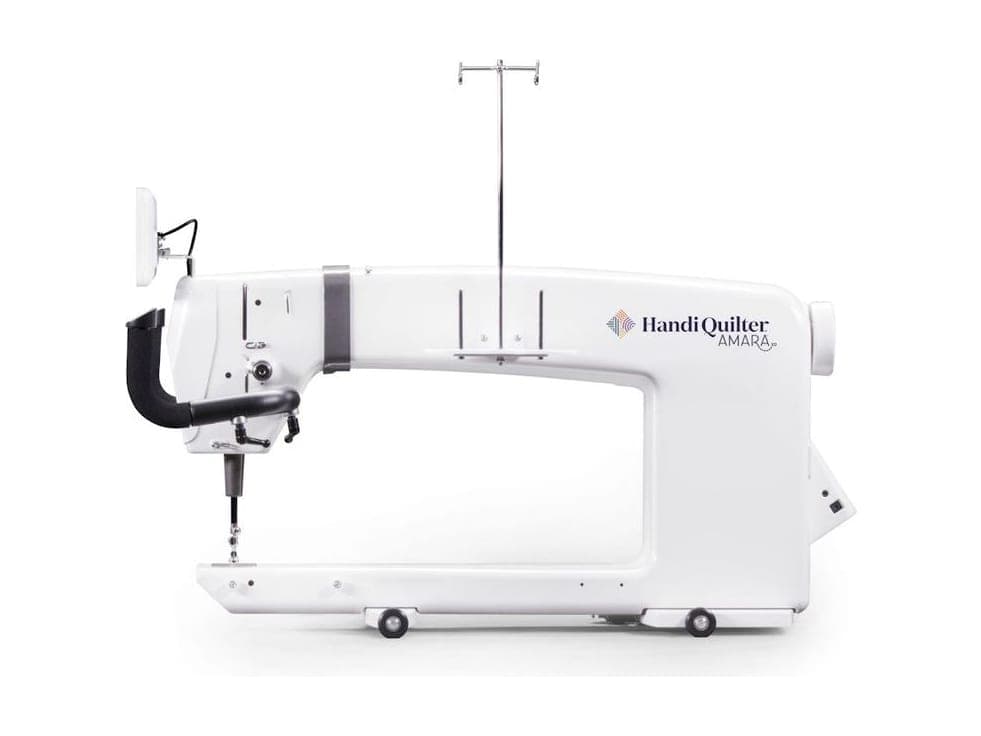
Long-arm18 in and up1,800 to 2,600 spm$12,500 to $52,999Yes, 10 to 14 ftA room

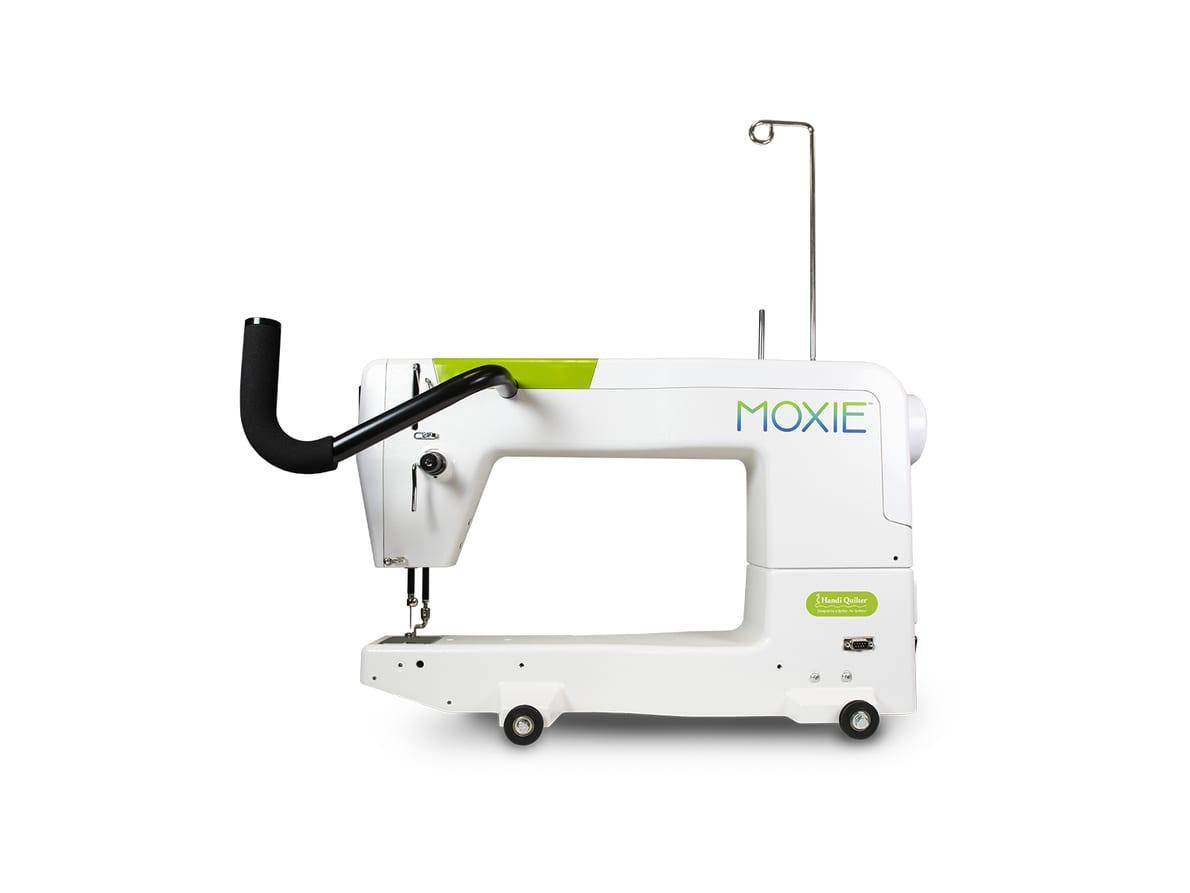
Price bands are dealer or maker prices we saw on 2026-09-29, not averages; the full list with sources is in the long-arm cost guide. Speed is the maker's motor figure. On a frame, the stitch regulator and your hand set the working speed: the Handi Quilter Moxie's regulated range is 50 to 800 spm against a 1,800 spm motor.

Domestic straight-stitch quilters

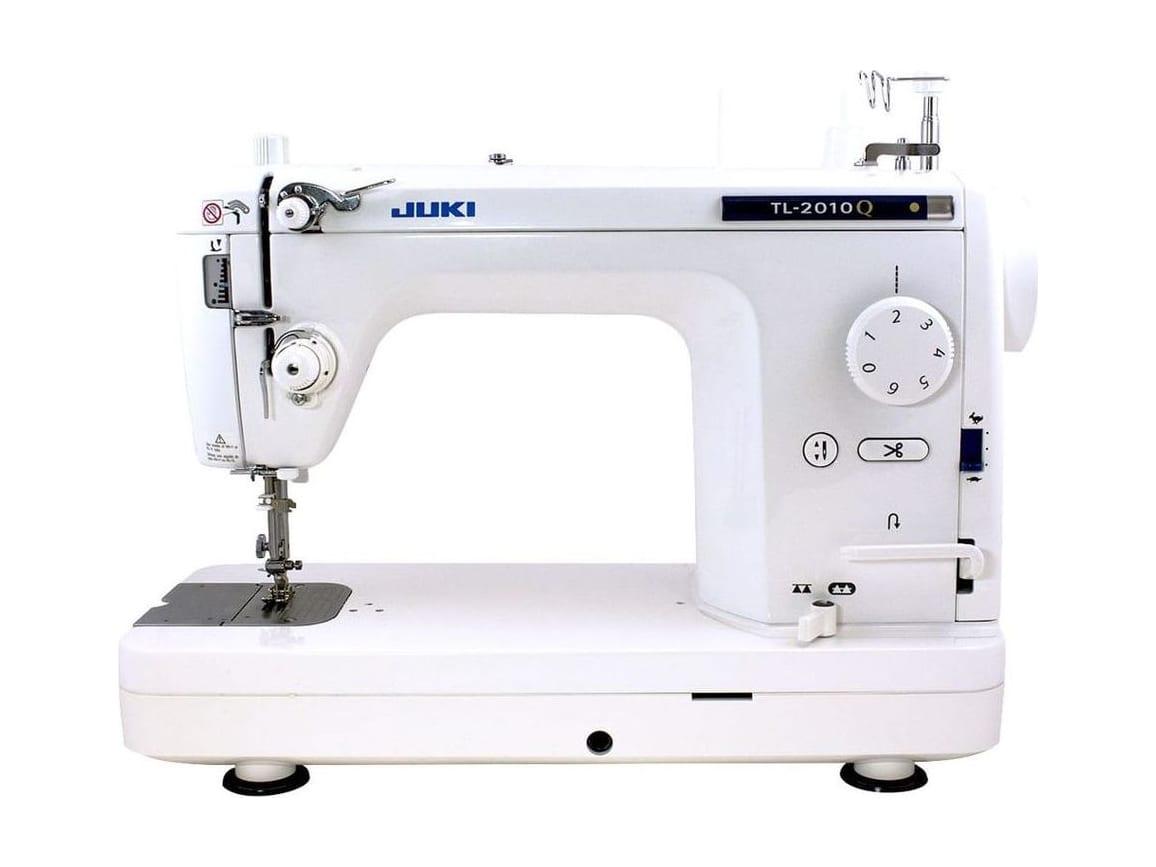
The Juki TL tier and the Brother PQ1600S: up to 1,500 spm, straight stitch only, 8.5 to 8.7 in of throat, drop feed dogs and, on the Juki, a knee lifter. It handles lap and throw quilts on a table and pieces fast. You keep a second machine for zigzag. Computerized quilters such as the Janome Memory Craft 6650 trade speed (1,000 spm) for stitch variety and a 10 in flatbed workspace.

Sit-down mid-arms

A long-arm style head mounted in a table, so you move the quilt, not the machine. 16 to 18 in of throat without a frame's footprint. The step for people who quilt whole tops on a domestic and want room, not a room. The Handi Quilter Sweet Sixteen (16 in, no frame) is the model we cover, and the maker no longer lists it, so buying means remaining dealer stock or the used market.

Stand-up long-arms

The machine rides on a frame and you move it over a quilt loaded on rollers. A 15 in head such as the Handi Quilter Moxie is an entry long-arm on a frame; 20 in and up is where professional quilters work. Budget the frame, stitch regulation, delivery and floor space. Handi Quilter says a 10 ft frame wants roughly 12 to 13 ft by 7.5 to 8 ft; a dealer guide gives 12 by 8 ft, with 2 ft clear around the head and a walking path.

Pick by what you quilt

Our reading of which tier fits which quilter, not a maker rule
You quiltStart atWhy
Lap and throw quilts, a few a yearDomestic quilter8.5 in of throat is workable at that size, and you pay a fraction of the next tier.
Queen and king tops on the machine you already ownDomestic, then reassessPossible with rolling and patience. If you run out of throat on more than one quilt, that is the sign to move up.
Several whole tops a month, no spare roomSit-down mid-arm16 to 18 in of throat at a table, no frame.
Whole tops regularly, with a room you can give overEntry long-arm on a frameA frame lets you work edge to edge without wrestling the quilt, from about $5,000 with the frame.
Quilting for othersLong-arm, 18 in and upThe tier professionals work in; frames, regulation and dealer support carry the cost.

Where the labels mislead

  • A seller's "long arm" is not a measurement. Some retailer titles call the 8.5 in Juki TL machines long-arms; by throat they are domestic.
  • Published tier ranges disagree. Two guides put mid-arm at 12 to 17 in and long-arm at 18 in and up. By that rule a 15 in frame machine is a mid-arm, yet Handi Quilter sells the Moxie as a long-arm and Grace dealers call the Q'nique 15R a midarm. We call 15 to 16 in heads on a frame entry long-arms and 16 to 18 in sit-down heads mid-arms.
  • Usable depth is less than throat width on a frame, because the take-up roller and clamps take part of it. The maker puts the Moxie at about 10 in usable of its 15 in. No maker publishes a usable-depth figure across the category, so treat any single number as soft.
  • Max spm is a motor figure. Compare regulated working ranges where the maker gives them.

What else decides it

  • Stitch regulation: built in on the Moxie and Q'nique 15R, an optional foot on some Bernina domestics, and not available for the Juki TL class.
  • A knee lifter, needle up and down, and a walking foot: check which are built in. Feet are not interchangeable across brands.
  • Dealer support: long-arms are sold and serviced through dealers, and owners of some brands report uneven dealer support. Ask who services the machine before you pay for the frame.

When to move up

  • You have run out of throat on a domestic on more than one quilt.
  • You quilt whole tops for others, or several a month for yourself.
  • You have the room, and the frame will not be folded away.
Short answer
Start at the domestic tier unless you already know throat space is your problem. Read the long-arm cost guide before pricing a frame.

How much does a long-arm cost? · Juki TL-2010Q vs TL-2000Qi · Best quilting machines
Domestic, entry long-arm, long-arm

Best quilting machines

Questions people ask

Is 9 inches of throat enough for quilting?
For lap and throw quilts on a table, yes. Queen and king tops are possible with rolling and patience; that is where people move to a mid-arm or long-arm.
What is a mid-arm quilting machine?
A long-arm style head with 16 to 18 in of throat mounted in a sit-down table. You move the quilt under the needle. Some sources stretch the band to 12 to 17 in, which is why 15 in frame machines get called mid-arms.
Do I need a frame for a long-arm?
Yes. A stand-up long-arm rides on a frame and you move the machine over a quilt on rollers. The Moxie bundle includes an 8 ft frame; sit-down mid-arms and domestic quilters need only a table.
How much space does a long-arm need?
Handi Quilter says a 10 ft frame wants roughly 12 to 13 ft by 7.5 to 8 ft of floor. A dealer guide gives 12 by 8 ft for a 10 ft frame and 14 by 8 ft for a 12 ft one. Smaller frames exist, such as a 5 ft frame for the Moxie.
Is a 15 inch machine a long-arm?
By throat it sits in the published mid-arm band. Because it is frame mounted and stitch regulated, we call it an entry long-arm on a frame.
Is a Juki TL a long-arm?
No. Some retailer titles say long arm, but the TL-2010Q has 8.5 in of throat, which is domestic.